NEW YORK, NY.- In a poignant and deeply illuminating
Asia Week New York webinar titled “
Guardians of Tradition: How Tibetan Art Lives on Through Museum Collections,” a distinguished panel of curators and scholars gathered to honor the monumental legacy of collector, author, and psychologist Dr. Alice S. Kandell. The event marked a rare, reflective moment in the art world, tracking the extraordinary journey of sacred Tibetan Buddhist artifacts from the private domestic space into two of America’s most prominent public institutions.
Artdaily Recommended · Paid Link
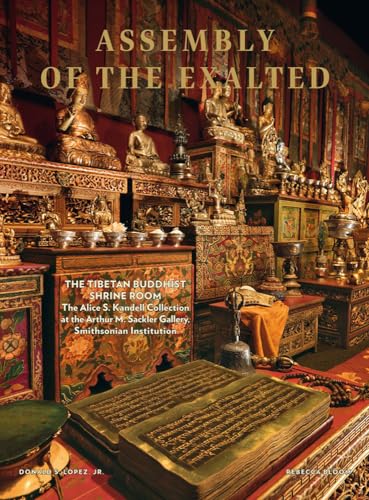
Assembly of the Exalted: The Tibetan Buddhist Shrine Room from the Alice S. Kandell Collection
A richly illustrated volume on Tibetan Buddhist art and devotional space
Explore the Alice S. Kandell Collection through a beautifully illustrated study of Tibetan Buddhist shrine rooms, sacred objects, ritual display, and Himalayan visual culture.
See it on Amazon → As an Amazon Associate I earn from qualifying purchases.
Over a forty-year collecting career, Dr. Kandell did something profoundly unique: rather than gathering isolated masterworks based on individual market values, she sought to preserve the holistic environment in which these sacred objects lived. Her tireless stewardship ultimately culminated in the historic gifting of two complete, immersive Tibetan Buddhist shrine rooms—each containing more than 200 sacred bronzes, paintings (thangkas), ritual implements, and silk hangings. The first room found a permanent home at the Smithsonian’s National Museum of Asian Art in Washington, D.C., while the second room was unveiled in a transformative installation at the Minneapolis Institute of Art (MIA).
Decontextualizing the Museum Cabinet
The webinar opened with an incisive look at the curatorial paradigm shift these gifts demanded. Moderated by Matthew Welch, Senior Deputy Director at the Minneapolis Institute of Art, the discussion challenged traditional Western museum conventions.
Prior to receiving Kandell’s gift, the MIA maintained a fine but modest collection of Himalayan art. The acquisition of the complete shrine room proved entirely catalytic.
“It triggered fresh consideration of the museum's commitment to Himalayan art,” Welch noted, “prompting the director to allocate nearly three times the square footage to the display of this material.”
Instead of placing sacred objects behind sterilized glass cabinets with clinical taxonomy labels, both the Smithsonian and the MIA set out to reconstruct the immersive, devotional spaces exactly as they had been reassembled in Dr. Kandell’s home. The result is an experience of lived culture. Visitors enter a room lined with traditional textiles and painted furniture, illuminated by flickering lights that evoke traditional butter lamps, while the sonorous, low-frequency chanting of Tibetan monks fills the air.
From a Himalayan Wedding to a Lifelong Passion
The emotional heart of the webinar belonged to Dr. Alice Kandell, who recounted the genesis of her lifelong devotion to the region. Her engagement began during her college years in the 1960s, when she took a pivotal journey to the former Himalayan Buddhist Kingdom of Sikkim to attend the royal wedding of Hope Cooke and the Crown Prince.
Equipped with her camera, Kandell documented the landscape and culture in two acclaimed books of photography, Sikkim: The Hidden Kingdom and Mountaintop Kingdom: Sikkim. Yet, it was her entrance into the intimate, candle-lit private chapels and monasteries of the Himalayas that irrevocably shifted her trajectory. She saw that Tibetan art was never meant to be viewed statically or in isolation; it was a dynamic, integrated visual cosmos meant to inspire spiritual exaltation.
For decades, while working as a child psychologist in New York, Kandell quietly rescued hundreds of 13th- to early 20th-century objects, treating them not as commodities, but as parts of a grander, sacred puzzle.

The Conservation and Ethics of “Breathing” Spaces
Debra Diamond, curator of South and Southeast Asian art at the Smithsonian’s National Museum of Asian Art, offered insight into the institutional stewardship of Kandell’s shrine room in Washington, D.C. Rebecca “Becky” Bloom contributed from a complementary perspective: as a scholar and curator specializing in Tibetan Buddhism, Buddhist material culture, and the intersection of religion and museums. Bloom is currently Interim Director and the Diane P. Stewart Director of Curatorial Affairs at the Southern Utah Museum of Art.
Diamond reflected on how the presence of a label-free, fully integrated shrine room altered the behavioral patterns of regular museum-goers. Rather than drifting past individual artifacts, visitors frequently sit quietly for long stretches inside the gallery, absorbing the collective spiritual weight of the space.
However, maintaining a “living” shrine room introduces serious conservation challenges. The discussion underscored the delicate friction between preserving fragile organic media—centuries-old silk banners, delicate pigments, and historical wooden furniture—and the desire to keep the environment feeling active and unmediated.
Furthermore, the panelists emphasized that these spaces must remain active centers of cultural preservation. The Smithsonian regularly collaborates with Tibetan and Himalayan diaspora groups, as well as Buddhist monks, to host live educational programming and rituals within the museum grounds. This ensures that the shrine rooms do not become stagnant monuments to a bygone era, but remain breathing, evolving spaces that continue to educate and inspire new generations.
The Dynamic Future of Himalayan Art
The webinar concluded with an exciting glimpse into the expanding footprint of Himalayan art across the United States. Beyond the permanent fixtures at the Smithsonian and the MIA, the panelists noted that institutions like the Seattle Asian Art Museum are currently expanding their narratives of Asian art through extensive collection-sharing partnerships—bringing Tibetan and Mongolian thangkas, illuminated manuscripts, and ritual sculptures into innovative, non-linear thematic displays.
Dr. Kandell’s legacy stands as a powerful testament to what can be achieved when a collector values context over individual acquisition. By gifting entire environments, she has ensured that the brilliant craftsmanship and profound spiritual traditions of Tibet will be experienced as they were always intended: as an enveloping, transcendent whole.







