BASEL.- Widely regarded as one of the most important painters of the 20th Century, German artist Max Beckmann created a singular position in the history of art through a figurative language of extraordinary psychological depth which still resonates with audiences today. Ahead of Art Basel 2026, a dedicated exhibition on Beckmann opened at Hauser & Wirth’s Basel gallery this June, curated in close collaboration with the artist’s granddaughter, Mayen Beckmann. Shaped by a life lived between two World Wars, Beckmann is best known for work that bears witness to the moral fractures of the inter-war period, who resisted categorization within expressionism and new objectivity. Bringing together self-portraits, landscapes and portraits spanning the entirety of his career, some of which have been rarely exhibited before, the exhibition unveils a more intimate dimension of Beckmann’s practice, albeit one that remains underlined with the anxiety and psychological intensity of the early 20th Century.
Artdaily Recommended · Paid Link
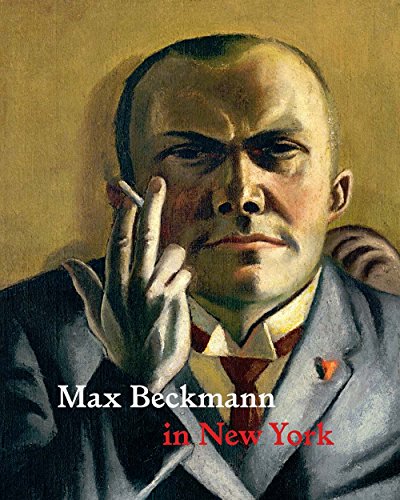
Max Beckmann in New York
By Sabine Rewald
A richly illustrated volume exploring Max Beckmann’s powerful late work and his important final years in New York.
See it on Amazon → As an Amazon Associate I earn from qualifying purchases.
The earliest works in the exhibition were created when Beckmann was still a student and testify to the remarkable independence of his style, even as a teenager. One of his first self-portraits, ‘Selbstbildnis mit Seifenblasen (Self-Portrait with Soap Bubbles)’ (ca. 1900), depicts the artist gazing pensively into the distance as soap bubbles float across the sky. Beckmann would go on to create more than 80 self-portraits over the course of his career, including ‘Selbstbildnis auf Grün mit grünem Hemd (Self-Portrait on Green with Green Shirt)’ (1938).
Created almost four decades later, the contrast between these two paintings reflects the transformative impact of World War I on his practice. Beckmann’s experiences serving as part of the German army’s medical corps in 1914 led him to suffer a nervous breakdown the following year. Abandoning the soft, painterly quality of the pre-war years, his work became characterized by angular forms, foreshortened viewpoints and subdued tones. These nightmarish scenes, represented here by the startling ‘Variété (Variety Show)’ (1927), articulated the widespread despair in German society under the Weimar Republic. Beckmann was regarded a luminary of the new objectivity movement and was a celebrated cultural figure during the Weimar Republic. His work also had strong visual affinities to expressionism and cubism – however, he refused to be affiliated with any artistic movement, instead honing a singular path within the history of art.

Alongside these brooding social allegories, however, a selection of luminous portraits reveals the softer gaze that Beckmann turned on certain subjects. The exhibition pairs ‘Schlafende (Sleeping Woman)’ (1924), a tender reclining nude of the artist’s first wife, Minna Tube, with an elegant yet enigmatic portrait of his second wife, Mathilde von Kaulbach, also known as Quappi. Painted the same year that the couple married, ‘Bildnis Quappi Beckmann (Portrait Quappi Beckmann)’ (1925) is the first portrait that Beckmann ever created of Quappi, who would go on to feature in countless paintings and is considered the artist’s most important muse. Later works, such as the striking ‘Mädchen mit gelber Katze (auf Grau) (Girl with Yellow Cat (on Gray))’ (1937), testify to Beckmann’s keen attention to his subjects’ personalities, capturing an extraordinary depth of character in each portrait.
As National Socialism grew in power and the outbreak of World War II grew closer, even Beckmann’s landscapes became marked by increasing uncertainty and unease. Works on view from this period include ‘Küstenlandschaft mit Ballon (Seashore with Balloon)’ (1932), one of many seascapes that Beckmann produced during his career. For Beckmann, landscape painting was a form of self-expression and he infused his depictions of the world with profound emotion, here communicating his longing for escape as a balloon drifts by and a fishing boat sails away. In July 1937, one day after the opening of the infamous Entartete Kunst (Degenerate Art) exhibition in Munich, in which 10 of Beckmann’s works were included, the artist fled to Amsterdam, where he remained in exile for the next decade.
Beckmann’s years in the Netherlands would prove to be the most productive of his career. He turned to classical mythology as a means of expressing contemporary experiences, hiding his own likeness in works such as ‘Mars und Venus (Mars and Venus)’ (1939). The monumental ‘Die Erschrockene (The Frightened Woman)’ (1947), meanwhile, was one of the final works that Beckmann made before he emigrated to the United States in 1947, taking up a post at Washington University in Missouri recently vacated by Philip Guston. When Beckmann passed away in New York just three years later, his place as one of the giants of 20th-century art history had been secured. His work continues to influence generations of artists today, from Henry Taylor to William Kentridge, attesting to Beckmann’s enduring relevance and preeminent vision.
Max Beckmann (1884–1950) was a leading German painter and a fiercely individual modern artist whose work bridged tradition and upheaval. Born in Leipzig, he trained in a conservative academic style but soon rejected its limits, developing a bold visual language of compressed space, strong outlines, and symbolic intensity. The trauma of World War I deeply shaped his vision, leading him to depict tense, often crowded scenes that explore human vulnerability and resilience. Though sometimes linked to new objectivity, he remained independent, drawing on myth, religion, and personal experience. Forced into exile by the Nazi regime, Beckmann continued to paint powerful works reflecting identity and displacement, creating art that challenges viewers to search for meaning within complexity.







